
Blackpool
The Seasiders
Next Match - League One


Blackpool Football Club Heritage Archive (What We Plan to Build)
Below is a proof-of-concept preview showing what we aim to build for Blackpool Football Club, documenting industrial origins, lost terraces, matchday walks, DIY fanzines, unsung backroom figures, and filmed supporter oral histories.
Because broadcast-grade supporter filming and museum-standard memorabilia digitisation carry significant production costs, we cannot film all 22 clubs at once. We are launching Phase 1 with a strictly limited cohort of 4 to 6 Founding Partner Clubs, before expanding to 8 clubs in Phase 2 and the final 8 clubs in Phase 3. All text, quotes, and media below are illustrative proof-of-concept examples showing what we will build for Blackpool.
How We Will Build the Blackpool Football Club Chronicle
This interactive prototype demonstrates how we plan to present Blackpool Football Club’s era-by-era history, spotlight figures, and defining milestones. Due to the cost of producing filmed supporter interviews and archival digitisation, we will roll out full Club Chronicles in structured phases, beginning with an initial cohort of Phase 1 partner clubs before expanding across all 22 North West teams. Use the arrows or era tabs below to preview the planned format.
Origins, Early League Entry & Working-Class Roots
Blackpool Football Club was formed in 1887 as Blackpool FC. Founded in 1887, Blackpool entered the Football League in 1896, adopting their famous tangerine shirts in 1923 and becoming one of the most celebrated names in British sports history. Through mass community backing and local industrial roots, the club quickly established itself as a foundational pillar of North West sporting heritage.
Leading figures and local workers who established Blackpool Football Club in 1887, helping lay the roots of Lancashire football culture.
Defining Milestones of this Era (4 Key Moments)
Formed as Blackpool FC by local community members.
Competed in historic regional Lancashire and Cheshire county cup ties.
Established permanent residency at Bloomfield.
Cemented status as the sporting heartbeat of the local town.
Planned Blackpool Supporter Oral History Tapes (Concept Preview)
Illustrative prototype cards showing how we will film, catalogue, and present eyewitness recollections, away day stories, and authentic terrace memories with lifelong Blackpool supporters when Blackpool's phase is commissioned.

Industrial & Community Roots
Founded in 1887, Blackpool entered the Football League in 1896, adopting their famous tangerine shirts in 1923 and becoming one of the most celebrated names in British sports history.
Adopted in 1923 when Dutch referee Albert Fogg suggested tangerine jerseys to stand out on seaside winter afternoons.
Stadium & Lost Terraces
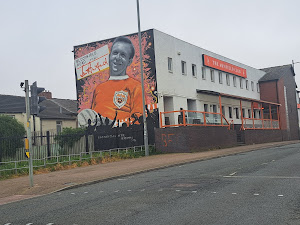
Bloomfield Road has been Blackpool's home since 1899, famous for the Spion Kop, the smell of sea air from the Irish Sea, and the statue of Sir Stanley Matthews outside the West Stand.
The huge open South Paddock and the original wooden Scratching Sheds of Bloomfield Road.
Defining Folklore Moments
Down 3-1 with 20 minutes remaining, Stanley Matthews inspired an astonishing comeback with Stan Mortensen scoring a hat-trick to beat Bolton 4-3.
Brett Ormerod scored the winner in a thrilling 3-2 victory over Cardiff City at Wembley to send the Tangerines into the Premier League.
DIY Fanzine Revolution (1970s–90s)
UTMP ('Up The Mighty Pool') became the fierce protest voice during the supporter boycott that successfully reclaimed the club in 2019.
The Historic Matchday Walk
Along Central Drive and Lytham Road, with the Blackpool Tower looming behind the Bloomfield Road floodlights.
Unsung Backroom Legends
Jimmy Armfield played 627 matches for Blackpool over 17 years, never leaving the club and becoming the moral conscience of seaside football.
“Tangerine isn't just a colour; it is a way of life on the Fylde Coast. Stanley Matthews and Ian Holloway gave this club an immortal romantic spirit.”
"I Was There" • Planned Supporter Memoirs & Oral History (Sample Format)
“I travelled down to Wembley on the steam train. Matthews was unplayable on the right wing. When Bill Perry stroked in the winner in stoppage time, the roar could be heard back in Blackpool.”
Club Details
🏟️ Stadium & Pitch
Stadium: Bloomfield Road
Pitch Size: 112 × 72 yd
Surface: grass
👕 Team Strips
Home: Tangerine with white trim
Away: White with tangerine accents
Third: Navy with light blue
📞 Contact Info
Main Phone: 01253 599745
Ticket Office: 01253 599745
Team Podcasts
Ranked by number of YouTube subscribers

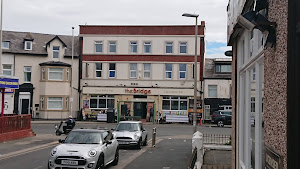
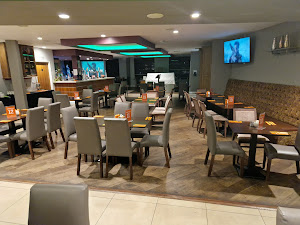
Interactive Matchday Map(all services within 3 miles)


Top Scorers
All Competitions • 25/26 Season