Blackburn Rovers
Rovers
Next Match - Championship
Blackburn Rovers Heritage Archive (What We Plan to Build)
Below is a proof-of-concept preview showing what we aim to build for Blackburn Rovers, documenting industrial origins, lost terraces, matchday walks, DIY fanzines, unsung backroom figures, and filmed supporter oral histories.
Because broadcast-grade supporter filming and museum-standard memorabilia digitisation carry significant production costs, we cannot film all 22 clubs at once. We are launching Phase 1 with a strictly limited cohort of 4 to 6 Founding Partner Clubs, before expanding to 8 clubs in Phase 2 and the final 8 clubs in Phase 3. All text, quotes, and media below are illustrative proof-of-concept examples showing what we will build for Blackburn Rovers.
How We Will Build the Blackburn Rovers Chronicle
This interactive prototype demonstrates how we plan to present Blackburn Rovers’s era-by-era history, spotlight figures, and defining milestones. Due to the cost of producing filmed supporter interviews and archival digitisation, we will roll out full Club Chronicles in structured phases, beginning with an initial cohort of Phase 1 partner clubs before expanding across all 22 North West teams. Use the arrows or era tabs below to preview the planned format.
Foundations, FA Cup Dominance & John Lewis
Blackburn Rovers was born on 5 November 1875 at the Leger Hotel on King Street, when 17 young men answered a call by 20-year-old schoolfriends John Lewis and Arthur Constantine. Within a decade, Rovers became the undisputed giants of English football, representing northern working-class professionalism against southern amateur aristocrats. Between 1884 and 1891, Rovers captured five FA Cups in eight seasons, playing breathtaking passing football and moving into their permanent home at Ewood Park in 1890.
Co-founder at age 20, John Lewis became world football's most celebrated Victorian referee. He officiated three FA Cup Finals and at three Olympic Games (1908, 1912, 1920), where he famously stood his ground in the 1920 Gold Medal match after sending off a Czechoslovak defender, leading to an international walkout.
Defining Milestones of this Era (8 Key Moments)
Founded on 5 November by John Lewis, Arthur Constantine, and 15 local men.
Became the first northern team to reach the FA Cup Final, facing Old Etonians at the Kennington Oval.
Defeated Scottish powerhouse Queen's Park 2-1 at the Oval to claim their first national silverware.
Retained the trophy against Queen's Park and West Bromwich Albion, winning three successive FA Cups.
One of 12 clubs meeting at the Royal Hotel in Manchester to establish the world's first league.
Moved into their permanent home on the banks of the River Darwen.
Beat The Wednesday 6-1 and Notts County 3-1 to take their FA Cup tally to five in eight years.
Captained by legendary full-back Bob Crompton, Rovers captured two English League Championships in three seasons.
Planned Blackburn Rovers Supporter Oral History Tapes (Concept Preview)
Illustrative prototype cards showing how we will film, catalogue, and present eyewitness recollections, away day stories, and authentic terrace memories with lifelong Blackburn Rovers supporters when Blackburn Rovers's phase is commissioned.
Industrial & Community Roots
Founded in 1875 at the Leger Hotel. 1888 Football League founder members, Rovers dominated early Victorian football, winning five FA Cups in eight years before Jack Walker led them to the 1994/95 Premier League title.
Derived from the club's roaming origins in 1875 across various local fields before settling at Ewood Park.
Stadium & Lost Terraces
Ewood Park has been Rovers' home since 1890, completely transformed in the 1990s by Jack Walker with the Jack Walker and Ronnie Clayton Stands overlooking the River Darwen.
The original Leamington Street ground and the old Riverside terrace before Jack Walker rebuilt Ewood Park.
Defining Folklore Moments
Despite a 2-1 defeat at Anfield on the final day, Manchester United's draw at West Ham confirmed Blackburn as Premier League champions.
Graeme Souness led Rovers to the 2002 League Cup with a 2-1 victory over Tottenham Hotspur at the Millennium Stadium.
DIY Fanzine Revolution (1970s–90s)
Named after the line in The Beatles' classic song 'A Day in the Life', this iconic fanzine has been published continuously since 1989.
The Historic Matchday Walk
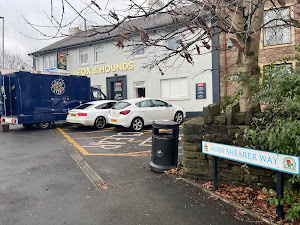
Along Bolton Road and past the Leeds and Liverpool Canal directly into the Blackburn End turnstiles.
Unsung Backroom Legends
Served Blackburn Rovers for 34 consecutive years as player, coach, and caretaker manager a record six separate times, always stepping in to steady the club without ego.
“Ewood Park is where local passion met modern football history. Jack Walker proved that a proud industrial mill town could conquer the Premier League.”
"I Was There" • Planned Supporter Memoirs & Oral History (Sample Format)
“Jack Walker gave us the dream. Walking out of Anfield with the transistor radio glued to my ear, hearing that United had drawn at Upton Park... I collapsed in tears of joy.”
Club Details
🏟️ Stadium & Pitch
Stadium: Ewood Park
Pitch Size: 115 × 76 yd
Surface: grass
👕 Team Strips
Home: Blue and white halves
Away: Black
Third: Bright yellow
📞 Contact Info
Main Phone: 01254 372001
Ticket Office: 01254 372000
Team Podcasts
Ranked by number of YouTube subscribers
Interactive Matchday Map(all services within 3 miles)
Championship
| # | Club | Pl | GD | Pts |
|---|---|---|---|---|
| 8 | 3 | +1 | 5 | |
| 9 | 3 | +1 | 5 | |
| 10 | 3 | 0 | 4 | |
| 11 | 3 | 0 | 4 | |
| 12 | 3 | -1 | 4 |

Top Scorers
All Competitions • 25/26 Season